


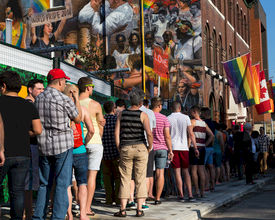
If you want to start your event with a disaster, force your attendees to endure endless waiting lines and stressful check-in procedures. Also known as accreditation, the event check-in describes the access you provide (for example, by issuing credentials) to your event and to specific areas within it.
As Kevin Van der Straeten writes in his book EVENTPLANNER, your accreditation system isn't an afterthought, it's a core part of your event's operational planning. It needs to be integrated into your site plan, budget, and run-of-show from the very beginning. The right system depends entirely on the nature of your event: who needs access to what, where, and when. Different areas, different people, different levels of clearance - it all needs to be thought through in advance, with the right policies, materials and staff training in place before the doors open.
Get it wrong, and your check-in procedure becomes the first thing your attendees experience, for all the wrong reasons. A slow or chaotic entrance sets a negative tone that's hard to recover from, no matter how good the rest of your event is. Get it right, and your guests walk in smoothly, feeling welcome and well organised from the very first moment.
To make sure you're in that second camp, here are the tips you need to set up an efficient check-in system.
Tip 1. Encourage the attendees to print their badge before the event
Long waiting lines occur when identifying and accrediting each person takes longer than it should. Imagine this: The attendee approaches the check-in desk, identifies themselves, waits for you to print and fold the badge, and only then enters the event venue. Obviously, to expedite this procedure, you can easily install multiple check-in desks.
However, there's another trick you can use (and save on personnel costs): Encourage your attendees to print their badges before the event. With their identification badge on hand, attendees can either enter the venue directly or approach the check-in desk for the plastic badge cover and goody bag. This will shorten the wait time and ensure a smooth flow of guests. To encourage your attendees to generate badges before the event, you can specify that on-site badge printing will incur an additional fee.
Tip 2. Set up an automated check-in system
Instead of installing multiple check-in desks at the entrance, you can set up an automated accreditation system. For example, you can install a series of check-in machines that will identify the attendees and print the badges instantly. This process can be ensured by informing guests that they'll need to download their personal QR code.
Subsequently, they'll approach the check-in machine, scan the code, and get their badge. Of course, it’s recommended to provide assistance, so if you decide to use the automated check-in machines, make sure to assign a few volunteers to accompany the attendees along the process.
Tip 3. Establish multiple flow lines
If you want to run an efficient check-in dynamic, you must facilitate various entrances and flow lines. For large events, search for venues with multiple escalators and access points. This will speed up the accreditation procedure, and people won't have to wait very long to enter the event space.
Tip 4. Provide badges with special codes
Depending on your event type and goals, the check-in procedure may continue after the general accreditation procedure. For example, let's say you are planning a trade show, and depending on the types of attendees, some guests will have access to the knowledge sessions and others won't.
In this case, you’ll have to assign people to check each attendee's identity before allowing them to access the knowledge area. To move this procedure along as quickly as possible, ensure badges include special codes indicating each attendee's access rights. Then, the volunteers may scan the event guests' codes who want to assist with the knowledge sessions.
Tip 5. Consider adopting face recognition technology
Although new and not widely used in the event industry, face recognition will define the future of check-in dynamics. Using various biometric technologies, a face recognition system will automatically identify attendees. This may accelerate the accreditation procedure and facilitate the attendee flow.
Wrap-up
One of the first interactions with the event environment is the check-in desk. That's why it's important to provide a stress-free accreditation experience for your attendees, without long waiting lines or confusing identification procedures.