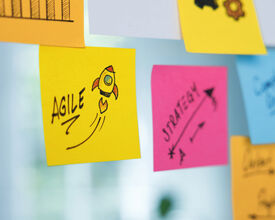
Many organisers still work according to a classic project approach with tight schedules and GANTT charts. But anyone who's ever organised an event knows how unpredictable reality can be. Deadlines don't shift, suppliers do, and priorities change along the way.
That is why more and more organisers are choosing an agile way of working, a flexible method that allows for continuous adjustments, better collaboration and faster results.
In the excerpt below from the book EVENTPLANNER, Kevin Van der Straeten explains why agile project management, including scrum and kanban, is a game-changer for event professionals. This is also the approach at the heart of the eventplanner.net event management software, where agile principles are translated into practical tools. Many organisers are already using agile, perhaps without even realising it!
From the book:
The significant disadvantage of a traditional project approach with GANTT charts is that you can be sure of one thing: that the estimates you make beforehand are always wrong. This is logical, because they are, and always will be, estimates. For an event, this uncertainty about the planning can be fatal. After all, you can't push the date back a few days at the last minute just because you're not ready yet. With a traditional project approach, it's also quite possible that you lose a lot of time on details early on because they come first chronologically, causing you to run out of time later on much more critical tasks. An agile project approach, such as Scrum, offers a fundamentally different approach with major advantages for events.
Agile has been a well-known project approach in the IT sector for years, enabling Silicon Valley companies like Facebook and Google to roll out high-quality projects at breakneck speed. And that sounds like music to the ears of event planners.
With an agile approach, you divide a project into small (feasible) pieces. You work in a scrum team with a maximum of ten people, to keep things efficient. You appoint a ScrumMaster, who oversees progress.
You start by creating a list of all the tasks for your event. In the eventplanner.net software, we use a Kanban board where tasks are displayed in three columns: to do, in progress, and done. This way, you always have insight into who is working on what and the status of each task. The team assigns each task a specific priority. During the project, tasks can be added, modified, or deleted as needs change. In any case, make sure your tasks are clearly defined. "Arrange venue" might be a bit broad and could be better divided into tasks like "Create shortlist of venues," "Visit venues," "Negotiate price," etc. This way, each subtask doesn't have to be assigned to the same person. Our event software can populate your Kanban board with a template of common tasks for the event type that you organise, so you don't have to start from scratch. You can also choose to set up a new event based on a previous one. The software will then take over all the tasks and script rules and adjust them to the new date. This is an ideal way to build on the knowledge from your previous events.
Once you've created your to-do list, the real work begins. You identify the highest-priority tasks and delegate them to the team by assigning them to a specific person. Progress is monitored daily. The day starts with a stand-up meeting where all team members briefly share what they did the day before, what they're planning to do, and any issues they're experiencing. This allows for immediate adjustments if someone gets stuck or needs help. Meetings are held standing to keep them short and efficient (a maximum of ten minutes).
The major advantage of agile working is that you can continuously adjust, be flexible to changing market conditions, and that errors or problems are quickly identified and addressed by the team. The very direct way of collaborating and sharing challenges also has a powerful effect on the team's "yes, we can" mentality. In other words, you achieve better results with the same team within the same timeframe. Better because priority is constantly given to what truly matters.
The downside of agile is that it requires greater client involvement, which is crucial, and that you have less clarity upfront about the exact end result. You have to have confidence in both the process and the team. An experienced team leader is therefore essential.
Dutch
Veel organisatoren werken nog volgens een klassieke projectaanpak met strakke planningen en GANTT-charts. Maar wie ooit een event heeft georganiseerd, weet hoe onvoorspelbaar de werkelijkheid is. Deadlines verschuiven niet, leveranciers doen dat wel, en prioriteiten veranderen onderweg.
Daarom kiezen steeds meer organisatoren voor een agile manier van werken, een flexibele methode die toelaat om continu bij te sturen, beter samen te werken en sneller resultaat te boeken.
In onderstaand fragment uit het boek EVENTPLANNER legt Kevin Van der Straeten uit waarom agile projectmanagement, met onder andere de scrum en kanban, ook voor eventprofessionals een gamechanger is. Dat is ook de aanpak die centraal staat in de eventplanner.net event management software, waar agile principes vertaald zijn naar praktische tools. Veel organisatoren gebruiken ondertussen dus al agile, zonder het misschien te weten!
Uit het boek:
Het grote nadeel van een klassieke projectaanpak met GANTT-charts is dat je van één ding zeker kunt zijn: dat de inschattingen die je op voorhand maakt altijd fout zijn. Dat is logisch ook, want het zijn en blijven inschattingen. Voor een evenement kan juist die onzekerheid over de planning fataal zijn. Je kunt de datum van je evenement immers niet last minute een paar dagen achteruit schuiven omdat jij nog niet klaar bent. Het is bij de klassieke projectaanpak ook goed mogelijk dat je in het begin van het traject heel wat tijd verliest aan details omdat die chronologisch eerst komen, waardoor je later in tijdnood komt bij veel belangrijkere taken. Een 'agile' projectaanpak, waar Scrum een voorbeeld van is, gooit het over een heel andere boeg en dat heeft grote voordelen voor evenementen.
Agile is al jaren een bekende projectaanpak in de ICT-sector, die ervoor zorgt dat bedrijven uit Silicon Valley zoals Facebook en Google in een razendsnel tempo kwalitatieve projecten kunnen uitrollen. En dat klinkt als muziek in de oren van eventplanners.
Met een agile aanpak deel je een project op in kleine (haalbare) stukken. Je werkt in een scrumteam met – om het effici.nt te houden – maximaal tien personen. Je benoemt een ScrumMaster, die de voortgang in goede banen leidt.
Je begint met het opstellen van een lijst met alle taken voor je evenement. In de eventplanner.net-software werken we met een Kanban-bord waarop de taken worden weergegeven in drie kolommen: to do, in progress en done. Zo heb je altijd inzicht in wie waarmee bezig is en wat de status van elke taak is. Elke taak krijgt van het team een bepaalde prioriteit. Tijdens het project kunnen er taken bijkomen, aangepast worden of geschrapt worden afhankelijk van de veranderende behoeften. Zorg in ieder geval voor goed afgebakende taken. 'Locatie regelen' is misschien wat ruim en kan beter opgesplitst worden in taken als 'Shortlist met locaties opstellen', 'Locaties bezoeken', 'Over prijs onderhandelen', ... Op die manier hoeft elk van de deeltaken ook niet bij dezelfde persoon te zitten. Onze eventsoftware kan je Kanban-bord vullen met een sjabloon van taken die gebruikelijk zijn voor het type evenement dat je organiseert, zodat je niet van nul hoeft te beginnen. Daarnaast kun je ervoor kiezen om een nieuw evenement op te zetten op basis van een eerder evenement. De software neemt dan alle taken en draaiboekregels over en past deze aan op de nieuwe datum. Dit is een ideale manier om voort te bouwen op de kennis van je eerdere events.
Als je je takenlijst hebt opgesteld, begint het echte werk. Je kijkt naar de taken die de hoogste prioriteit hebben en delegeert ze naar het team door ze aan een specifieke persoon toe te wijzen. Dagelijks wordt de voortgang gemonitord. De dag begint met een stand-up waarbij alle teamleden kort vertellen wat ze de dag ervoor gedaan hebben, wat ze gaan doen en waarmee ze problemen ondervinden. Op die manier kan er meteen bijgestuurd worden als iemand vastloopt of hulp nodig heeft. De meetings gebeuren staand, zodat ze kort en efficiënt blijven (maximaal tien minuten).
Het grote voordeel van agile werken is dat je continu kunt bijsturen, flexibel bent voor veranderende marktomstandigheden en dat fouten of problemen heel snel komen bovendrijven en door het team aangepakt kunnen worden. De heel directe manier van samenwerken en uitdagingen delen heeft bovendien een krachtig effect op de ‘yes we can’-mentaliteit van het team. Met andere woorden, je realiseert met hetzelfde team binnen dezelfde termijn een beter resultaat. Beter omdat er constant prioriteit wordt gegeven aan wat echt belangrijk is.
Het nadeel aan agile is dat het een grotere betrokkenheid vergt van de opdrachtgever die cruciaal is en dat je van tevoren minder zicht hebt op wat het eindresultaat exact zal zijn. Je moet vertrouwen hebben in het proces én in het team. Een ervaren teamleider is dus geen overbodige luxe.
More about this topic and lots of other tips about organising events can be found in the book EVENTS.
Order now
Source: Phot: iStockPhoto 1456827453