

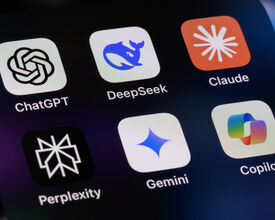
A growing share of event planners are turning to AI assistants as an extra starting point for research. Alongside the specialised platforms and search engines they already use - eventplanner.net's own search engine, for example, now leans on AI to better understand what someone is looking for - they also open ChatGPT, Claude, Perplexity or Gemini and ask in plain language: "Find me a venue in London for a 200-person product launch with a courtyard and good catering." Or: "What are the leading fintech conferences in Europe next year?" The assistant doesn't return a list of links. It returns an answer- usually with two to seven recommendations baked into it.
If your event, venue, agency or event business is in that answer, you win. If you're not, you don't exist.
That shift has a name: Generative Engine Optimisation, or GEO. It's the practice of shaping your online presence so AI systems pick you when they assemble a recommendation. The good news is that the underlying logic isn't a black box, and most of the work is within reach of any event or event business that already takes its digital presence seriously.
This article walks through what's actually known about how these systems decide who to cite, what an event business can do about it, and where eventplanner.net fits in.
How AI assistants decide who to mention
Large language models don't have a ranked list of "the best caterers in Paris" sitting in a database. When a planner asks a question, two things happen.
First, the model leans on what it learned during training - patterns from millions of pages, articles, directories, reviews and forum threads. If your business is mentioned consistently, in context, on credible sources across the open web, the model has learned to associate your name with the kind of work you do.
Second, most modern assistants now also do live retrieval. They break the question into smaller sub-queries, fetch results from search engines and trusted indexes, read a handful of pages, and synthesise an answer. That live layer is where fresh content, recent reviews and well-structured pages can lift you into a response in real time.
Two implications follow. One: traditional SEO still matters, because the live layer often starts from a search index. Two: being cited by other people on credible sites is now as valuable as ranking on your own site - sometimes more so.
What you can do as an event business or organiser
1. Make your website easy for machines to read
AI systems extract information; they don't read like humans. Pages that bury the answer under three paragraphs of marketing copy lose to pages that put the facts up top.
For each key page on your site, ask: can a machine pull out, in seconds, the facts that matter? For a venue, that's capacity, location, catering, price range, and standout features. For a recurring conference, it's the dates, the host city, the topic, the speakers, the audience and what sets this edition apart. If the answer is no, fix it. Use clear headings, short paragraphs, real lists for real lists, and tables for actual data. Match what's visible on the page with what's in the page's underlying structure.
2. Add proper schema markup
Schema markup (structured data, usually in JSON-LD format) is a labelled summary of your page that machines read directly. The most useful types for the industry are Organisation or LocalBusiness, Event, Review and FAQPage. If you run a recurring conference or festival, the Event schema deserves particular attention - it's how AI systems learn that your next edition exists, when it runs, who's speaking and where to send people who want to attend.
Microsoft has publicly confirmed that its Copilot LLM uses schema to interpret content, and Google has said the same about AI Overviews. For other platforms, it's less certain, but the cost of doing it well is low, and the upside is real. Don't stuff every possible property in - pick the schema that matches what's actually on the page, and validate with Google's Rich Results Test before you push it live.
3. Answer the questions guests or planners actually ask
AI assistants pull most often from content that directly answers a question. If a planner is likely to ask "What's the capacity of [your venue] for a seated dinner versus a standing reception?", or a prospective delegate is likely to ask "What does [your conference] cover and who tends to attend?", that exact answer should appear, in plain language, on your page.
A short FAQ section per page - phrased the way a planner phrases questions - is one of the highest-leverage things you can add. It feeds both Google snippets and AI extractions in one move.
4. Be findable on third-party sources
Every credible mention of your business outside your own website is a vote of confidence that the model can pick up on. Industry directories, trade press, partner websites, recap articles, podcast episodes, interviews, and association listings - all of them feed into the picture an AI builds of your brand.
This is where many event businesses leave the most on the table. They have a polished website and almost no presence beyond it. AI systems trust third-party context far more than self-description.
5. Collect and act on reviews
Reviews do double duty. They're a direct ranking signal in classic search, and they're a signal of trust that AI systems weigh when deciding which businesses to put forward. A venue with thirty recent, varied, verified reviews looks very different to an AI than a venue with two reviews from 2021. The same logic applies to recurring events: testimonials from past editions, recap coverage and mentions in industry roundups all feed the model's picture of whether your conference is the real thing.
Reviews also feed extractable phrases. When a planner asks "Which venues in Ghent are praised for their staff?", the model is looking for the words praised and staff near a venue name. You can't fake that - but you can earn it and make sure it's published somewhere a machine can read.
6. Keep your facts consistent everywhere
Name, address, phone, capacity, opening hours, and list of services. If your website says one thing, your Google Business Profile another, and your eventplanner.net business page a third, AI systems get conflicting signals and tend to drop you from confident answers. Pick the canonical version and align everything to it.
7. Publish, regularly
The single most reliable predictor of being cited is being current. Research consistently finds that AI systems prefer content that is meaningfully fresher than what classic search rewards. A business that publishes posts monthly on a trusted platform like eventplanner.net is a moving target the models keep re-encountering. A business that hasn't updated anything in two years fades out of the answer set.
How eventplanner.net helps
Most of the GEO advice above is about signals: where you appear, how you're described, how often you're refreshed, and how machine-readable that information is. eventplanner.net is built to generate exactly those signals at scale.
A business page acts as a third-party authority signal.
With more than 19,500 listed event businesses, eventplanner.net is treated by search engines and by AI systems as a reference point for the event industry. A complete business page - with accurate categories, keywords, photos, video and a link back to your own site - is one of the cleanest entries an AI can read about you. Not listed yet? Create your business page now!
Verified reviews give AI a trust signal it can act on.
When an assistant decides which businesses to recommend, it weighs reviews heavily - and weighs verified reviews from a credible source far above scattered or anonymous mentions. Every review collected on eventplanner.net undergoes manual and algorithmic checks before it goes live, which is exactly what the provenance models look for when separating active, reputable businesses from inflated profiles. The more recent and varied the reviews on your page, the stronger that signal becomes. You can extend it further by embedding the eventplanner.net review widget on your own site or even going a step further by integrating the review API - bringing the same verified track record to the pages AI assistants read when they look you up directly.
Posts keep your presence current.
Publishing regular posts on your business page - event cases, behind-the-scenes notes, news from your team - does two things. It refreshes the signal AI systems see when they revisit eventplanner.net, and it gives them new, specific, datable content to extract. A page that hasn't moved in a year is treated as static. A page with a post from last week is treated as a live, active business.
Crafted content multiplies the effect.
Beyond your business page, advertorials, spotlights and eventplanner.tv interviews give you a fundamentally different kind of asset: editorial content on a reference platform, written to answer the questions planners (and the AI assistants planners use) are actually asking. The same article that convinces a human reader to request a quote - or to register for your next edition - also feeds a model with extractable facts about what you do, who you do it for, and what makes you specific. Contact our editorial team to discuss the options for calibrated content for both the planners reading it today and the agents who will quote it tomorrow.
The bottom line
GEO isn't a separate discipline that replaces SEO; it's what a good digital presence looks like when more of the audience is AI rather than humans scrolling Google. The fundamentals are unglamorous: clear pages, accurate facts, real reviews, regular publishing, and a presence on platforms credible enough for a model to trust.
The event industry is still early on this curve. Most venues, suppliers and organisers haven't moved yet. That's the opportunity - the businesses that put the work in over the next twelve months will be the ones an AI assistant names by default when the next planner types a question into the chat. Let us help you!
Source: Photo: iStockPhoto 2196139559