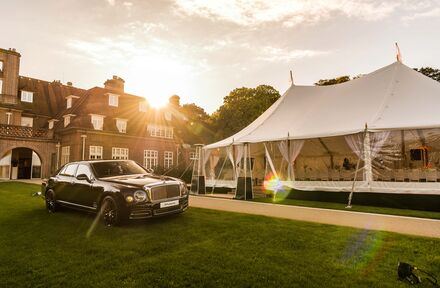
A monumental location gives an event something that no modern event hall can replicate: character. High ceilings, old wooden floors, a garden that has been around for a hundred years: these are places that tell a story in themselves before anyone even speaks.
However, those same characteristics that make a monumental location so special also create limitations that you do not have to take into account at a standard event venue. At Huyze Drost, we often work at these types of locations, and we notice that clients, even seasoned event professionals, regularly encounter the same surprises. Based on that experience, we have listed the most important points to consider.
1. A monument permit and status determine what is and is not allowed.
A national or municipal monument falls under the Heritage Act and the associated permit system. In concrete terms, this means: you may not simply drill, screw, conceal cables behind paneling, or attach anything to the facade. Even temporary interventions, such as a sign, a tent against the facade, or lighting hung from a beam, may require a permit.
Practical tip: always check with the location exactly what the monumental status entails and which interventions are permitted without separate permission. At Huyze Drost, we have established these agreements per room in advance, so that we can tell clients immediately what is possible and what is not.
2. The acoustics are different, and that is not necessarily a disadvantage.
High ceilings, stone floors, and few soft materials create a very different sound experience than in a modern, acoustically damped hall. Speeches sound fuller, but music and background noise can start to echo as the evening progresses and the room becomes busier.
Practical tip: always have sound technology tested separately in the actual space, not based on square meters alone. An AV partner with experience at heritage sites knows where directional microphones and speakers are needed to prevent reverberation without cluttering the room with equipment.
3. Electrical and technical systems are often not designed for event use
Many monumental buildings have an electrical installation designed for residential or office use, not for an evening with catering, lighting, sound, and possibly a DJ set all at the same time. Adding extra capacity is by no means always possible without extensive (and permit-required) modifications.
Practical tip: have the power capacity calculated in advance by the venue or a technical partner, and if necessary, use generators placed out of sight (and hearing) of the guests. This is exactly the kind of logistics we include as standard in the preparation at Huyze Drost, because skipping it causes the most headaches afterwards.
4. Catering logistics requires creativity
Monumental buildings rarely have a modern, continuous kitchen infrastructure. Often there is no direct walkway from the kitchen to the hall, door frames are too narrow for large equipment, or a kitchen is missing altogether and the catering team works from a mobile setup.
Practical: a catering partner accustomed to this type of location builds the menu and service around the limitations, rather than the other way around. Think of dishes that travel well, service in smaller groups, or a temporary outdoor kitchen. This is precisely why, at Huyze Drost, we approach catering and venue as a single entity rather than two separate suppliers.
5. Weather dependence plays a bigger role than you think
Many heritage sites derive their appeal precisely from the combination of indoor and outdoor spaces, such as a garden, a courtyard, or a driveway. This means that the weather has a direct influence on the experience, and that a sudden change in weather can have serious logistical consequences if there is no well-developed weather plan in place.
Practical: always work with a concrete plan B and plan C (not just "then we'll go inside"), including agreements on when that decision will be made and who will make it.
6. Accessibility and reachability are often less self-evident
Monumental sites are often situated in locations not designed for heavy freight traffic, large numbers of cars, or wheelchair accessibility via the main entrance. Historic thresholds, stairs, and narrow paths are part of the site's character but require a deliberate approach.
Practical: map out the walking routes for guests, suppliers, and emergency services separately, and arrange alternative access where necessary. This should be included in the event plan as standard, not as a separate point of attention afterwards.
7. The atmosphere is the strongest argument, so protect it as well.
The paradox of monumental venues: the reason clients choose them (authenticity, character, history) is also the first thing lost with the wrong approach. Too much modern event technology, generic styling, or a standard event setup can reduce a monumental building to "just a hall."
Practical: let the architecture lead the styling rather than the other way around. Choose technical solutions that remain invisible, and use the existing character of the space as a backdrop instead of overwhelming it with temporary decoration.
Finally
A monumental location requires a different approach to organization than a regular event venue—not necessarily more difficult, but with different priorities. Those who take these points into consideration early in the process not only prevent practical problems but also get the most out of precisely what makes a monumental location worthwhile: a place that no one can replicate.
Huyze Drost organizes events and provides catering at monumental and heritage sites throughout the Netherlands.
nl
Een monumentale locatie geeft een evenement iets wat geen enkele moderne eventhal kan namaken: karakter. Hoge plafonds, oude houten vloeren, een tuin die al honderd jaar meegaat: het zijn plekken die zelf al een verhaal vertellen voordat er ook maar iemand het woord neemt.
Maar diezelfde eigenschappen die een monumentale locatie zo bijzonder maken, zorgen ook voor beperkingen waar je bij een standaard eventlocatie geen rekening mee hoeft te houden. Bij Huyze Drost werken we vaak op dit soort locaties, en we merken dat opdrachtgevers, ook doorgewinterde eventprofessionals, regelmatig tegen dezelfde verrassingen aanlopen. Op basis van die ervaring zetten we de belangrijkste aandachtspunten op een rij.
1. Monumentenvergunning en -status bepalen wat wél en niet mag
Een rijksmonument of gemeentelijk monument valt onder de Erfgoedwet en het bijbehorende vergunningsstelsel. Dat betekent concreet: je mag niet zomaar boren, schroeven, kabels wegwerken achter een lambrisering of iets aan de gevel bevestigen. Zelfs tijdelijke ingrepen, zoals een uithangbord, een tent tegen de gevel, of verlichting die aan een balk wordt gehangen, kunnen vergunningplichtig zijn.
Praktisch: vraag bij de locatie altijd na wat de monumentale status precies inhoudt en welke ingrepen zijn toegestaan zonder aparte toestemming. Bij Huyze Drost hebben we deze afspraken per ruimte vooraf vastgelegd, zodat we opdrachtgevers meteen kunnen vertellen wat kan en wat niet.
2. De akoestiek is anders, en dat is niet per se een nadeel
Hoge plafonds, stenen vloeren en weinig zachte materialen zorgen voor een heel andere geluidsbeleving dan in een moderne, akoestisch gedempte zaal. Speeches klinken voller, maar muziek en achtergrondgeluid kunnen juist gaan galmen naarmate de avond vordert en de ruimte drukker wordt.
Praktisch: laat geluidstechniek altijd los testen in de daadwerkelijke ruimte, niet op basis van vierkante meters alleen. Een AV-partner die ervaring heeft met erfgoedlocaties weet waar richtmicrofoons en gerichte speakers nodig zijn om galm te voorkomen zonder de ruimte vol te hangen met apparatuur.
3. Elektra en techniek zijn vaak niet berekend op eventgebruik
Veel monumentale panden hebben een elektrische installatie die is ontworpen voor bewoning of kantoorgebruik, niet voor een avond met catering, verlichting, geluid en eventueel een DJ-set tegelijk. Bijschakelen is lang niet altijd mogelijk zonder ingrijpende (en vergunningplichtige) aanpassingen.
Praktisch: laat de stroomcapaciteit vooraf doorrekenen door de locatie of een technisch partner, en werk zo nodig met aggregaten die buiten het zicht (en gehoor) van de gasten worden geplaatst. Dit is precies het soort logistiek dat we bij Huyze Drost standaard meenemen in de voorbereiding, omdat het achteraf de meeste kopzorgen oplevert als het wordt overgeslagen.
4. Cateringlogistiek vraagt om creativiteit
Monumentale panden hebben zelden een moderne, doorgetrokken keukeninfrastructuur. Vaak is er geen directe looproute van keuken naar zaal, zijn deuromlijstingen te smal voor grote apparatuur, of ontbreekt een keuken helemaal en werkt het cateringteam vanuit een mobiele setup.
Praktisch: een cateringpartner die gewend is aan dit soort locaties bouwt het menu en de bediening om de beperkingen heen, in plaats van andersom. Denk aan gerechten die goed reizen, bediening in kleinere rondes, of een tijdelijke buitenkeuken. Dit is precies waarom wij bij Huyze Drost catering en locatie als één geheel benaderen in plaats van als twee losse leveranciers.
5. Weersafhankelijkheid speelt een grotere rol dan je denkt
Veel erfgoedlocaties ontlenen hun aantrekkingskracht juist aan de combinatie van binnen en buiten, zoals een tuin, een binnenplaats, of een oprijlaan. Dat betekent dat het weer een directe invloed heeft op de beleving, en dat een weersomslag serieuze logistieke gevolgen kan hebben als er geen goed uitgewerkt weerplan ligt.
Praktisch: werk altijd met een concreet plan B én plan C (niet alleen "dan gaan we naar binnen"), inclusief afspraken over wanneer die knoop wordt doorgehakt en wie dat besluit neemt.
6. Toegankelijkheid en bereikbaarheid zijn vaak minder vanzelfsprekend
Monumentale locaties liggen regelmatig op plekken die niet zijn ingericht op groot vrachtverkeer, grote aantallen auto's, of rolstoeltoegankelijkheid via de hoofdingang. Historische drempels, trappen en smalle paden horen bij het karakter van de locatie, maar vragen om een bewuste aanpak.
Praktisch: breng de looproutes voor gasten, leveranciers en hulpdiensten apart in kaart, en regel alternatieve toegang waar nodig. Dit hoort standaard in het draaiboek, niet als los aandachtspunt achteraf.
7. De sfeer is het sterkste argument, dus bescherm die ook
Het paradoxale van monumentale locaties: de reden waarom opdrachtgevers ervoor kiezen (authenticiteit, karakter, geschiedenis) is ook het eerste dat verloren gaat bij een verkeerde aanpak. Te veel moderne evenemententechniek, generieke styling of een standaard eventopstelling kan een monumentaal pand herleiden tot "zomaar een zaal".
Praktisch: laat de architectuur leidend zijn in de styling in plaats van andersom. Kies technische oplossingen die onzichtbaar blijven, en gebruik het bestaande karakter van de ruimte als decor in plaats van het te overstemmen met tijdelijke aankleding.
Tot slot
Een monumentale locatie vraagt om een andere manier van organiseren dan een reguliere eventlocatie, niet moeilijker per se, maar wel met andere prioriteiten. Wie deze aandachtspunten vroeg in het proces meeneemt, voorkomt niet alleen praktische problemen, maar haalt ook het meeste uit precies datgene waarom een monumentale locatie de moeite waard is: een plek die niemand kan namaken.
Huyze Drost organiseert evenementen en verzorgt catering op monumentale en erfgoedlocaties door heel Nederland.